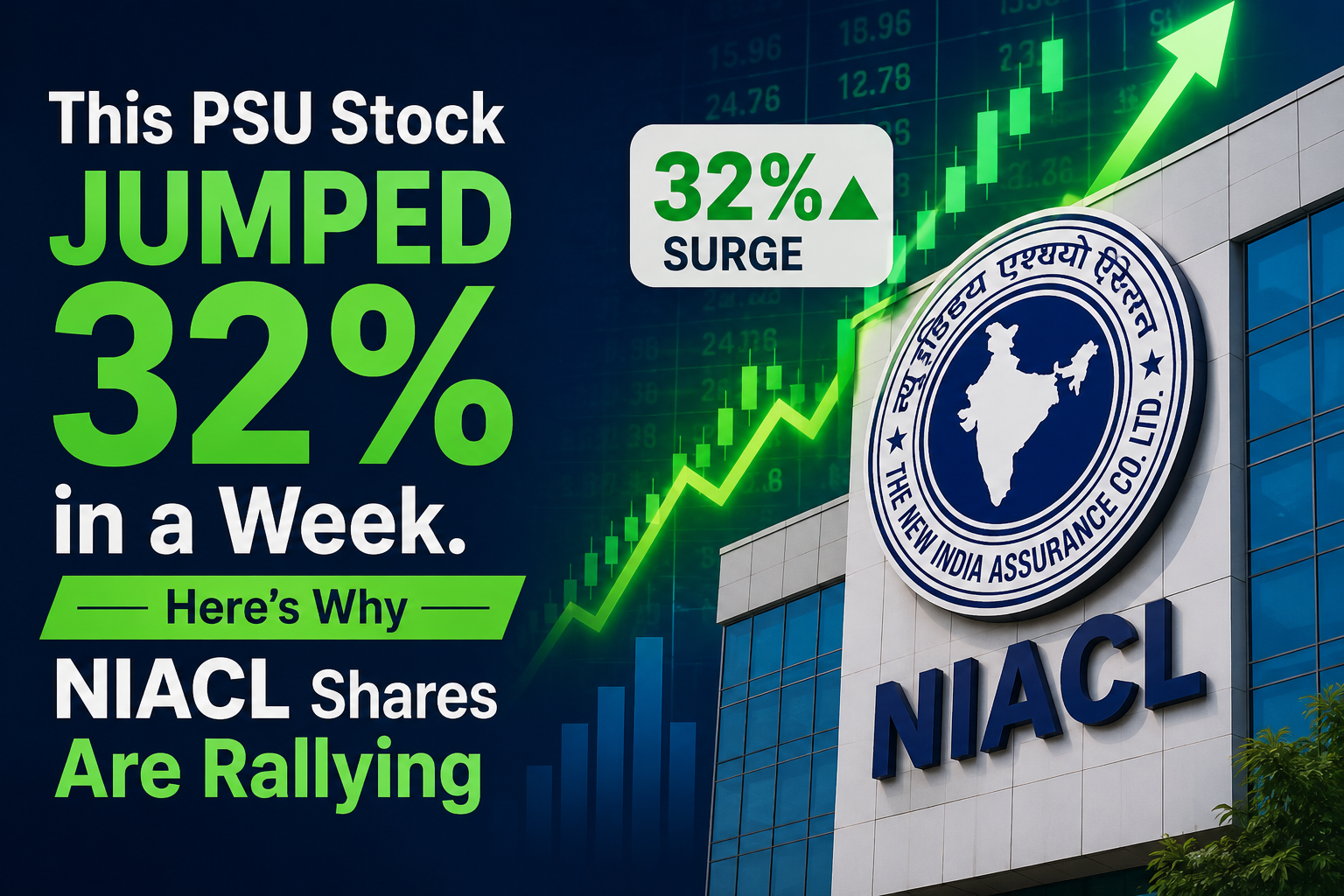
This PSU Stock Jumped 32% in a Week. Here’s Why NIACL Shares Are Rallying
The New India Assurance Company, or NIACL, suddenly became one of the hottest PSU stocks in the market last week.
NIACL shares ended June 19 at ₹202.31 after gaining roughly 32% during the week. The stock jumped more than 13% on Friday alone, following another sharp rally in the previous session.
Interestingly, the rally had little to do with the company selling more insurance policies.
The real trigger was the long-awaited IPO of the National Stock Exchange. NIACL owns a valuable stake in NSE and is now preparing to sell part of that holding through the public offer.
NIACL Share Price Rally at a Glance
| Key Detail | Information |
|---|---|
| NIACL closing price on June 19 | ₹202.31 |
| Approximate weekly gain | 32% |
| Main trigger | NSE IPO filing |
| NIACL’s existing NSE stake | Around 1.42% |
| NSE shares owned by NIACL | Approximately 3.52 crore |
| Shares proposed to be sold | Up to 1.05 crore |
| Estimated shares retained | Approximately 2.47 crore |
Why Is NIACL Share Price Rising?
The simplest answer is that the NSE IPO has brought NIACL’s valuable investment in the exchange into focus.
NIACL owns approximately 3.52 crore NSE shares, representing around 1.42% of the exchange. According to the draft IPO documents, the insurer plans to sell up to 1.05 crore NSE shares through the Offer for Sale.
Even after the sale, NIACL is expected to retain approximately 2.47 crore NSE shares, or close to a 1% stake in the exchange.
This created excitement for three reasons:
- NIACL can monetise part of an investment held for years.
- The IPO may establish a visible market value for NSE shares.
- NIACL will continue to own a sizeable stake after the listing.
In other words, the company is not completely exiting NSE. It is selling only part of its holding while retaining exposure to the exchange’s future growth.
How the NSE IPO Triggered the Rally
The rally did not begin with one sudden announcement. It developed in stages.
NIACL shares first started gaining when reports suggested that NSE was preparing to file its IPO papers. The stock rose further as investors began identifying listed companies that already owned NSE shares.
The decisive move came after NSE filed its Draft Red Herring Prospectus with SEBI. The document confirmed that NIACL would participate as a selling shareholder.
NIACL shares jumped as much as 14% on June 18 following the filing. The momentum continued on June 19, when the stock closed another 13.23% higher at ₹202.31.
The rally was therefore a classic case of anticipation followed by confirmation. Traders initially bought on expectations of the NSE filing and added to their positions after the details became public.
Why Is NIACL’s NSE Stake So Valuable?
NSE is India’s dominant stock exchange by trading activity across several important market segments. Its public listing has been awaited for years.
Until now, NIACL’s investment in NSE was an unlisted holding. Such investments can be difficult for ordinary investors to value because there is no continuously traded market price.
The IPO changes that.
Once NSE announces its price band and lists on the stock exchange, NIACL’s remaining holding will have a much more visible market value. This may help investors assess NIACL’s investment portfolio more accurately.
The proposed NSE IPO is entirely an Offer for Sale. This means the shares are being sold by existing shareholders rather than NSE issuing fresh shares. The proceeds from NIACL’s portion of the offer will therefore go to NIACL, subject to the final issue price and completion of the IPO.
However, the exact amount NIACL may receive cannot be calculated until NSE announces the IPO price.
It Is More Than Just a One-Time Stake Sale
The immediate attraction is the potential cash inflow from selling 1.05 crore NSE shares. But the retained holding may be equally important.
After the IPO, NIACL is expected to continue holding around 2.47 crore NSE shares. If the exchange performs well after listing, the value of this remaining investment could rise.
This gives NIACL two potential benefits:
- Immediate monetisation from the shares sold in the IPO
- Continuing exposure through the NSE shares it retains
That combination explains why the market reaction was stronger than it might have been for a complete exit.
Better Earnings Provided Additional Support
The NSE IPO was the main reason behind last week’s rally, but NIACL’s recent financial performance provided a more supportive backdrop.
For the March 2026 quarter, the company’s consolidated net profit increased by more than 61% year-on-year to approximately ₹578 crore.
Earlier, NIACL had reported a 29% rise in net profit for the December quarter, supported by investment income and premium growth.
These numbers suggest that the company’s core financial position was not weak when the NSE trigger arrived. Even so, investors should not confuse better quarterly results with the reason for the sudden 32% weekly jump. The speed of the rally was primarily driven by the NSE IPO and the expected value unlocking.
Is the NIACL Rally Justified?
Unlike a purely speculative rally, NIACL’s move is linked to a real asset and a disclosed plan to sell part of it.
The company owns NSE shares, it has been named as a selling shareholder, and the draft IPO papers have been filed. The underlying trigger is therefore genuine.
But price and value are not always the same thing.
After a 32% weekly rise, the stock may already be pricing in a sizeable benefit from the NSE transaction. The final value unlocked will depend on:
- NSE’s IPO price band
- The final number of shares sold by NIACL
- Taxes and transaction-related costs
- How NIACL uses the sale proceeds
- The post-listing performance of NSE shares
- NIACL’s insurance underwriting performance
Until the IPO valuation is announced, investors are working with expectations rather than a confirmed cash value.
What Are the Risks After the Sharp Rise?
Profit Booking
A stock that rises more than 30% in a week can attract short-term traders. Once the initial excitement settles, profit booking may create sharp volatility.
NSE IPO Valuation Risk
If NSE’s final IPO valuation is lower than market expectations, investors may reduce the value they assign to NIACL’s holding.
Event-Driven Rally
The recent move was led by a specific corporate event. Once the IPO-related news is fully priced in, NIACL will again be evaluated mainly on its insurance business.
Underwriting Performance
NIACL’s long-term profitability depends on premium growth, claim ratios, underwriting discipline and investment income. The NSE stake cannot permanently compensate for weakness in the core business.
Limited Immediate Information
The final price band and exact proceeds from NIACL’s stake sale are not yet available. Any calculation of the expected windfall remains an estimate.
What Should NIACL Investors Track Next?
Instead of focusing only on the recent share-price rise, investors should monitor:
- NSE IPO price band and valuation
- Final number of NSE shares sold by NIACL
- Estimated post-tax proceeds from the transaction
- Value of NIACL’s remaining NSE stake
- Management’s plans for using the proceeds
- Premium growth and underwriting losses
- Claims ratio and investment income
- Valuation after the recent rally
These factors will reveal whether the rally is supported by lasting value creation or mainly reflects short-term IPO excitement.
Final Takeaway
NIACL shares rose around 32% in one week because the NSE IPO turned an overlooked investment into a visible value-unlocking opportunity.
The company owns around 1.42% of NSE and plans to sell up to 1.05 crore shares through the IPO. It is also expected to retain close to a 1% stake, allowing it to benefit from NSE’s future performance.
That explains the excitement. NIACL may receive a sizeable cash inflow while continuing to own a valuable listed asset.
Still, the exact benefit remains unknown until NSE announces its IPO price. After such a rapid rally, investors should look beyond the headline gain and carefully compare the expected value of the NSE stake with NIACL’s current valuation and core insurance performance.
Frequently Asked Questions
Why did NIACL shares rise last week?
NIACL shares rallied mainly because NSE filed its IPO papers and named NIACL as one of the selling shareholders. The company plans to sell part of its NSE investment through the IPO.
How much stake does NIACL own in NSE?
NIACL owns approximately 3.52 crore NSE shares, representing around 1.42% of the exchange.
How many NSE shares will NIACL sell?
NIACL has offered to sell up to 1.05 crore NSE shares through the Offer for Sale component of the IPO.
Will NIACL completely exit NSE?
No. After the proposed sale, NIACL is expected to retain approximately 2.47 crore NSE shares, or close to a 1% stake.
How much money will NIACL receive from the NSE IPO?
The amount cannot be confirmed until NSE announces its final IPO price. The proceeds will depend on the final number of shares sold and the offer price.
Is NIACL an NSE IPO beneficiary stock?
Yes. NIACL is a direct beneficiary because it owns NSE shares and is participating as a selling shareholder in the public offer.
Should investors buy NIACL after the 32% rally?
The rally alone should not determine an investment decision. Investors should consider the NSE IPO valuation, NIACL’s core insurance performance, its current stock valuation and the possibility of short-term volatility.
Source Note
Share-price data and IPO details are based on NSE market information, NSE’s draft offer documents and NIACL’s reported financial results.
Disclaimer
This article is for educational and informational purposes only. It is not investment advice or a recommendation to buy or sell NIACL shares. Investors should conduct independent research or consult a SEBI-registered investment adviser.
Share this insight
Spread the Alpha
Related Articles
More ideas that align with your trading playbook.
DIIs Raised Stake in These Stocks: Gujarat Gas, Central Bank and Bandhan Bank Come Into Focus
DIIs Increased Stake in These Stocks: Why Investors Are Tracking Them When Domestic Institutional Investors, or DIIs, increase stake in a company,…

5 gainers and losers on NSE today 9th April – Should you trade them tomorrow?
9th April 2025 – Flagship index Nifty closed 126.35 points lower ending the day at 22504. Binani Industries Limited (BINANIIND) was among…

8₹ Telecom stock with high retailer holding gains 30% in 3 days- Check why
Vodafone Idea (Vi) traded under code NSE:IDEA and BOM: 532822 (BSE) is currently trading near its 2 year low of ₹5.8. The…

 DailyBulls (Arthashilpi Ventures) is a D-U-N-S verified company.