Blog

pandas for Algo Trading Data: A Practical Crash Course for Candle Data

Pandas becomes useful for trading research when you make time, price fields and table grain explicit. Sort each instrument’s timestamps, define the session and resampling bucket, aggregate OHLCV fields deliberately, keep missing observations visible, shift features before they become decision inputs and validate joins. These steps make transformations reproducible; they do not prove that the ...

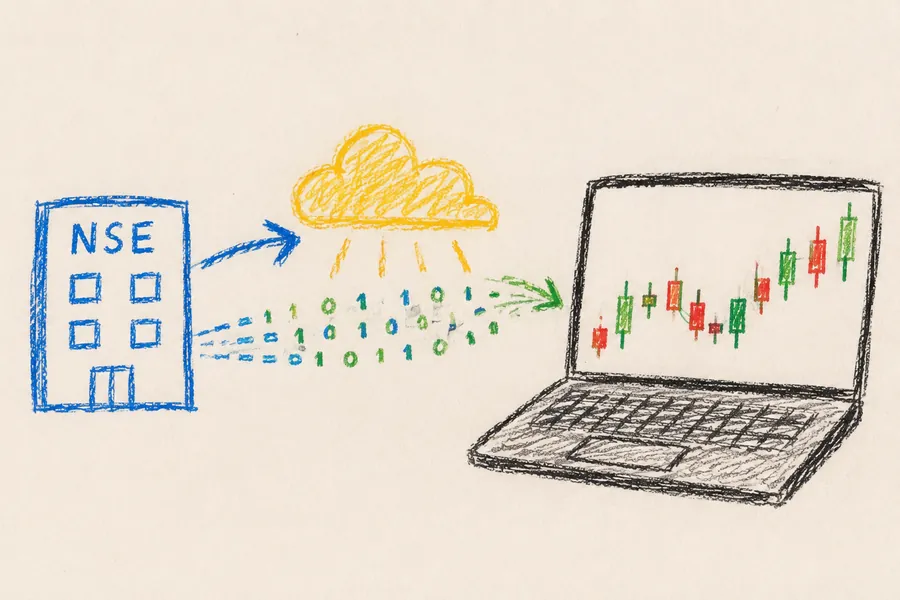
Building a Clean NSE Data Pipeline for Algo Trading: From Bhavcopy to Research-Ready Candles

Building a clean NSE data pipeline means more than download a file. It preserves the original input, records where each row came from, separates end-of-day and five-minute observations, handles India’s market sessions explicitly, and stops when a duplicate, gap or impossible OHLC row appears. This guide applies that contract to NSE cash-equity EQ data; it ...

Only Math You Need Before Coding your Algo Trading Strategy

You do not need advanced calculus to begin algorithmic trading. You do need a small, disciplined toolkit: measure returns consistently, describe uncertainty with probability, estimate expected outcomes, understand dispersion, respect sampling error and follow compounding. These ideas make a trading hypothesis precise. They do not create an edge, predict the next trade or guarantee a ...

Market mechanics for first time Algo Traders in India

Indian markets are not one continuous stream of prices. Cash equities, optional T+0 trades, opening and closing auctions, index futures and index options follow different clocks, contract rules and settlement processes. Trading code must understand sessions, order behaviour, lot metadata, expiries and official closing prices before it can interpret a signal or place an order ...

Algorithmic Trading in India: What It Is (and Isn’t)

If you are learning to trade with code, the first question is not which broker API to use. It is what, exactly, your software will do. Algorithmic trading in India means automated execution logic generates trading orders. It is broader than high-frequency trading (HFT), different from merely following a systematic method, and does not require ...

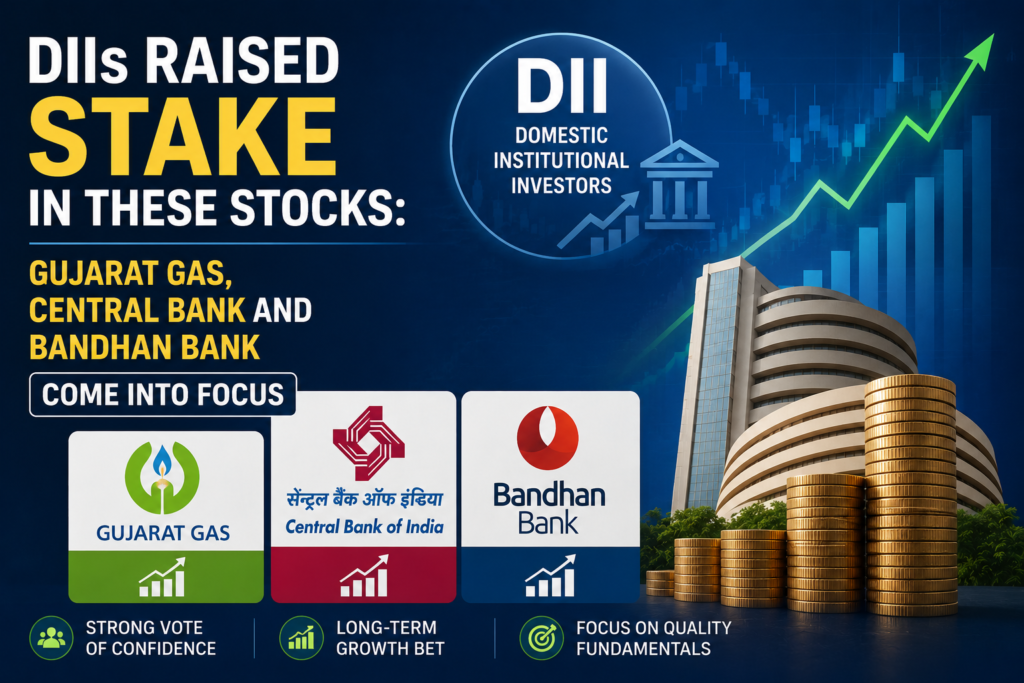
DIIs Raised Stake in These Stocks: Gujarat Gas, Central Bank and Bandhan Bank Come Into Focus

DIIs Increased Stake in These Stocks: Why Investors Are Tracking Them When Domestic Institutional Investors, or DIIs, increase stake in a company, the stock usually comes on investors’ radar. DIIs include mutual funds, insurance companies, banks and other Indian institutions. The reason is simple. Institutional investors generally study business performance, valuations, sector outlook, management commentary ...