Bank Nifty Fall: Liquidity Stress or Earnings Reset?
Bank stocks led the downside in a high-volatility session. The move was sharp, but classification is important.
For next-session sector confirmation, see stocks to watch tomorrow in India.
For full macro context, use the India Market Stress Playbook.
A one-day decline in financials can reflect liquidity unwind, valuation compression, or earnings-risk repricing. These drivers have different implications.
What current price action suggests
The first signal is risk reduction under macro uncertainty.
Volatility increased, headline risk remained elevated, and financials were used as liquid de-risking instruments. This can explain speed of decline without confirming a full earnings reset.
What would confirm an earnings reset
A stronger earnings-reset case needs follow-through evidence:
1. Downward earnings revisions
2. Clear margin pressure linked to funding costs
3. Treasury sensitivity reflected in forward estimates
4. Credit-cost caution in analyst and management commentary
Without these, the drawdown is more consistent with liquidity and valuation adjustment.
Practical framework
– Liquidity unwind names: sold quickly during index de-risking
– Valuation reset names: premium multiples compress as risk premium rises
– Balance-sheet concern names: funding mix and treasury profile become central
– Earnings-downgrade candidates: estimate cuts begin to follow price action
The first two buckets often appear in event-driven sessions. The last two decide whether weakness becomes structural.
What to monitor over the next 1-2 weeks
– Direction of earnings revisions for major lenders
– Commentary on deposit costs and margin stability
– Treasury-risk assumptions in broker models
– Breadth of weakness across private and PSU banks
Closing assessment
Current evidence supports a liquidity-stress and risk-premium interpretation first.
A confirmed earnings-reset call requires estimate cuts and margin-pressure validation.
Share this insight
Spread the Alpha
Related Articles
More ideas that align with your trading playbook.

Reliance AGM 2026 Highlights: Jio IPO, AI and New Energy Plans Explained
Reliance Industries’ annual general meetings usually come with big announcements. The 2026 AGM was no different. But beneath the new products, ambitious…
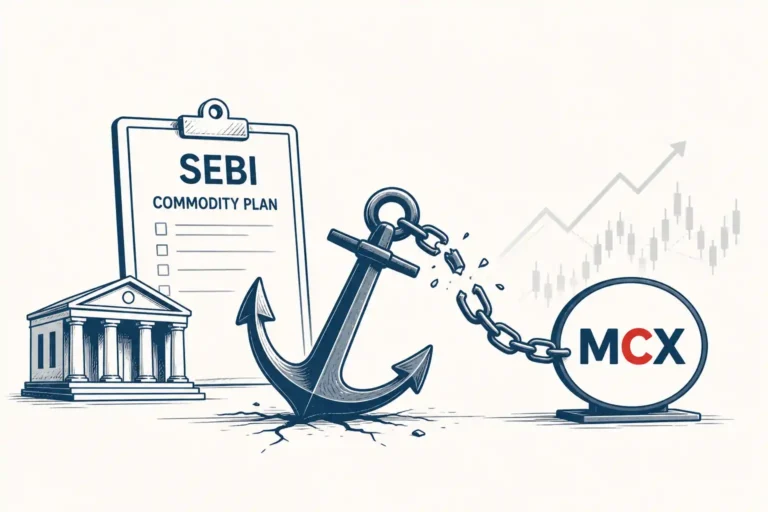
SEBI’s Commodity Plan Just Lost Its Institutional Anchor. What It Means for MCX
SEBI wanted banks, insurers, and eventually pension funds to deepen India's commodity derivatives market. RBI and IRDAI are not inclined to allow…

India’s Data Center Power Trade: Which Stocks Benefit First if AI Infra Spending Accelerates?
India's AI buildout may look like a software story, but the first listed winners could emerge from transformers, cables, switchgear, backup power,…

 DailyBulls (Arthashilpi Ventures) is a D-U-N-S verified company.