
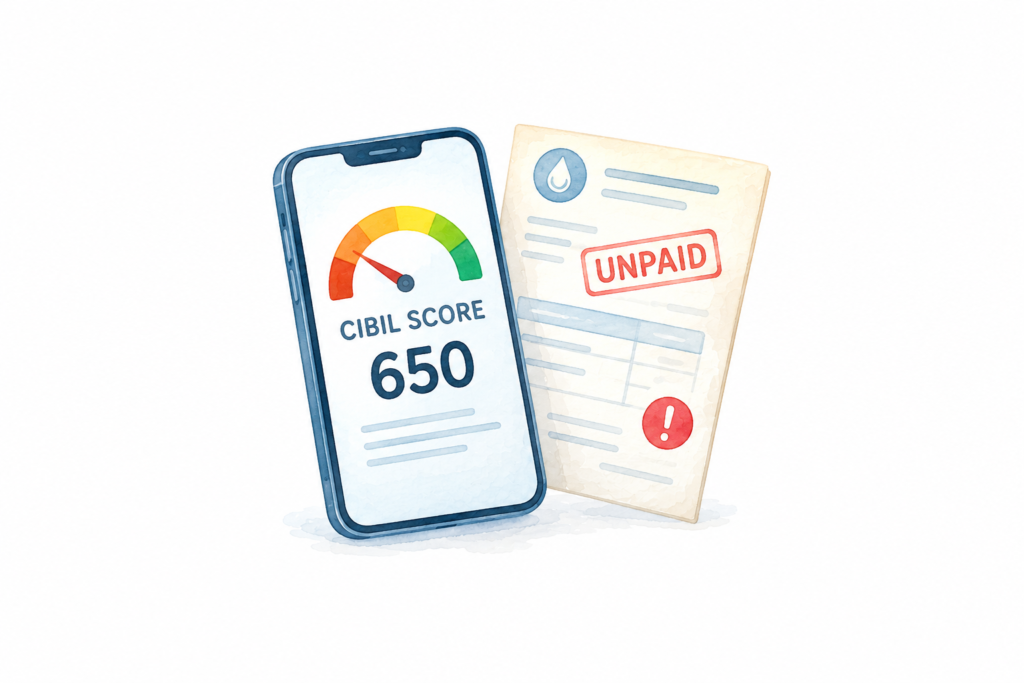
A postpaid mobile bill slips past its due date by a couple of weeks, or an electricity bill sits unopened in an inbox longer than it should, and a quiet worry creeps in afterward about whether that oversight just dented a credit report somewhere.
It is a reasonable thing to wonder, given how much attention credit scores get these days, but the actual answer depends on a distinction most people have never had a reason to think about: who is actually allowed to report that missed payment in the first place.
The Short Answer Is No, But It Isn’t Quite That Simple
Credit bureaus in India only receive data from institutions formally registered to report it, mainly banks, NBFCs, housing finance companies, and credit card issuers operating under the Credit Information Companies Regulation Act.
Telecom operators and utility providers are generally not part of that reporting chain, which means a late postpaid bill or an overdue electricity payment, on its own, typically does not get passed along the way a missed loan EMI or credit card payment would.
The bill still needs paying, and the service provider still has its own consequences for delay, but that specific consequence usually stops well short of the credit bureau’s doorstep.
Then Why Does the Rumor Persist?
Part of the confusion comes from lumping every recurring payment obligation into the same mental category as debt, when formal credit reporting actually works on a much narrower definition.
Another part comes from borrowing assumptions that apply elsewhere; some countries do fold utility payment history into certain specialty credit assessments, and that idea has drifted into local conversation even though it does not describe how the mainstream bureau system here actually works.
A credit score in India reflects specific reported credit accounts, not every bill a household happens to be juggling in a given month.
There Are a Few Situations Where It Can Still Matter Indirectly
The line gets blurrier in a few specific cases. A phone bought through an EMI plan financed by an NBFC, sometimes bundled together with a postpaid connection at the point of sale, is a genuine credit account underneath the marketing, and missing those installments behaves exactly like missing payments on any other loan.
Severely delinquent utility dues that escalate all the way to legal recovery, though this is uncommon for routine household bills, can eventually surface as an adverse record through channels separate from ordinary bill reporting.
Separately, some newer lenders build their own internal risk models using account aggregator data pulled from bank statements, which can indirectly pick up a pattern of missed recurring payments even though that analysis sits apart from the official CIBIL score itself.
What Should You Actually Watch For Instead?
The accounts genuinely shaping that number are the ones tied to actual lenders: credit cards, personal loans, vehicle loans, home loans, and any EMI-based financing taken through a bank or NBFC, including the device-financing scenario mentioned earlier.
Reviewing a full Poonawalla credit score report periodically, rather than assuming every bill in a household carries equal weight, makes it much easier to see exactly which obligations are actually influencing the number and which ones, however important to pay, simply are not part of that particular calculation.
A Habit Worth Keeping Regardless
None of this is an argument for treating utility bills casually. Late fees, disconnection risk, and the plain inconvenience of a lapsed connection are real consequences on their own, even without a credit bureau involved.
Separating which bills carry a credit consequence from which ones simply carry a service consequence just makes it easier to prioritize correctly when money is tight in a given month, rather than spreading equal anxiety across every payment due regardless of what is actually at stake behind it. Understanding this distinction removes a fair amount of unnecessary worry from everyday bill management. A missed top-up is an inconvenience to sort out with the telecom provider, while a missed loan installment is something that follows a person’s credit file for a much longer stretch. Knowing which category a given payment falls into makes it far easier to decide where genuine urgency belongs.