Financial discipline is a skill that often only hits people when they start earning and face real money challenges. That is why teaching children about savings works best when it mirrors real life.
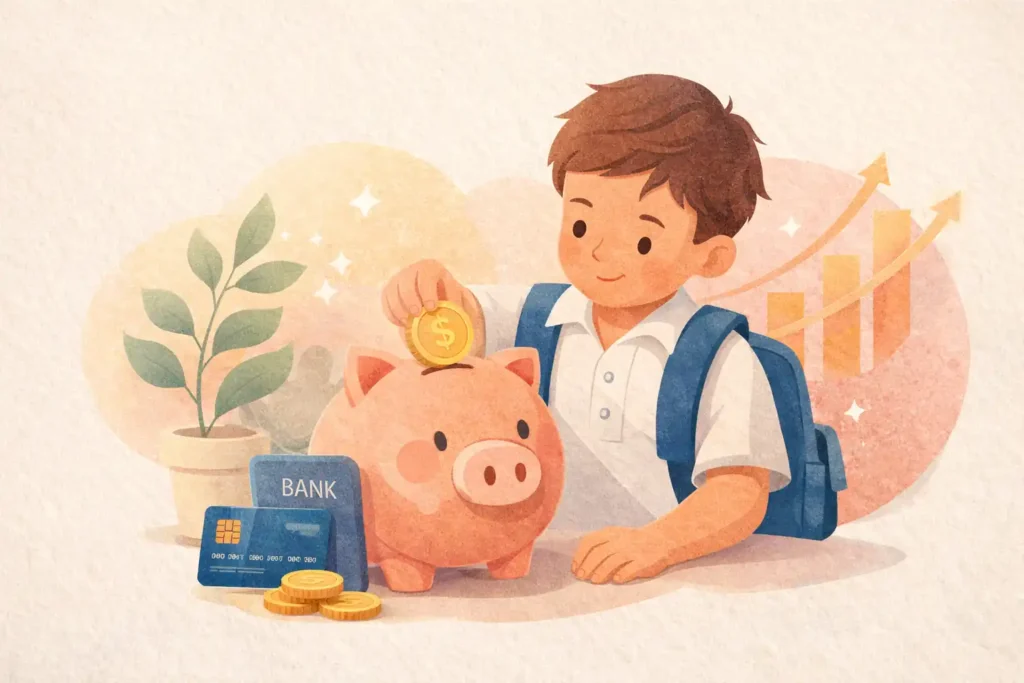
One of the most effective ways to introduce these lessons is through a formal banking product created specifically for minors. Kids’ bank accounts give children exposure to real financial systems. This early familiarity prepares them for the practical financial world they will eventually enter.
Understanding a Minor Savings Account
Simply put, a minor savings account is a savings account opened in the name of a child. Some core features include:
- The account is held in the child’s name
- A guardian manages operations to ensure safety and compliance
- Interest is earned on the deposited balance like a regular savings account
- Many banks remove minimum balance requirements for minors
Benefits of Minor Savings Accounts in Building Financial Discipline
Here are some practical benefits of kids bank account:
1. Understanding How Money Grows
Minor savings accounts make the concept of compounding tangible. Children can see their balance grow steadily through interest, making abstract ideas like savings account interest rate and compounding concrete. This teaches:
- Greater awareness of spending choices
- Willingness to plan for future needs
- Reduced impulse purchases
- Appreciation for consistency over quick rewards
2. Introducing Emergency Awareness Early
Emergency funds are rarely taught to children, but a minor savings account allows them to build this habit. They can:
- Set aside money for unexpected needs
- Avoid depleting their balance on non-essential items
- Understand why a financial buffer matters for stability
3. Practical Exposure to Banking Tools and Features
Parents can use minor accounts to introduce real banking mechanisms in age-appropriate ways, such as auto sweep facilities, account-linked debit cards, or online dashboards. This helps children understand:
- How idle money can be made more productive
- The difference between liquidity and higher returns
- The variety of saving and investment options available
4. Learning Comparison and Decision-Making Skills
As children grow, minor savings accounts provide a platform to introduce financial literacy in decision-making. Lessons include:
- Comparing features of different accounts beyond default options
- Understanding how the savings account interest rate affects growth
- Recognizing when specialised accounts suit specific needs better than standard ones
This foundation prepares them for more complex products later, such as fixed deposits, mutual funds, or market-linked investments.
Rules And Limits Applicable To Minor Savings Accounts In India
Minor savings accounts in India operate under specific regulatory guidelines designed to protect the child’s interests. Common rules include:
- A parent or legal guardian must be the account operator
- There are specialized self-operated accounts for older children
- Limits may apply to maximum balance and transaction amounts
- Certain services like overdrafts or unrestricted withdrawals are not permitted
- Full KYC of the guardian is mandatory
Preparing For the Transition at Age 18
When the child turns 18, the minor account is converted into a regular savings account after completing fresh KYC formalities. This transition is an important milestone.
It allows the young adult to:
- Operate the account independently
- Access a wider range of banking services
- Take full responsibility for financial decisions
Because they have already been using the account for years, the transition feels natural rather than overwhelming.
Choosing The Right Bank For Early Financial Learning
The structure and features of the account play a significant role in how effective the learning experience is. Many banks offer a Minor Savings Accounts designed to support both education and protection. These types of accounts provide competitive interest rates, monthly interest credits instead of the usual quarterly cycle, and additional benefits.
In Summary
When children grow up seeing how money behaves inside a bank, how interest is credited, how balances change slowly rather than instantly, they develop a quieter skill set. They learn restraint without being told to restrain. They learn planning without formal lessons. Most importantly, they learn that money responds to time and intention.
A minor savings account does not prepare a child for every financial decision, but it gives them something far more valuable. A sense of control rather than confusion when money finally becomes their responsibility.