
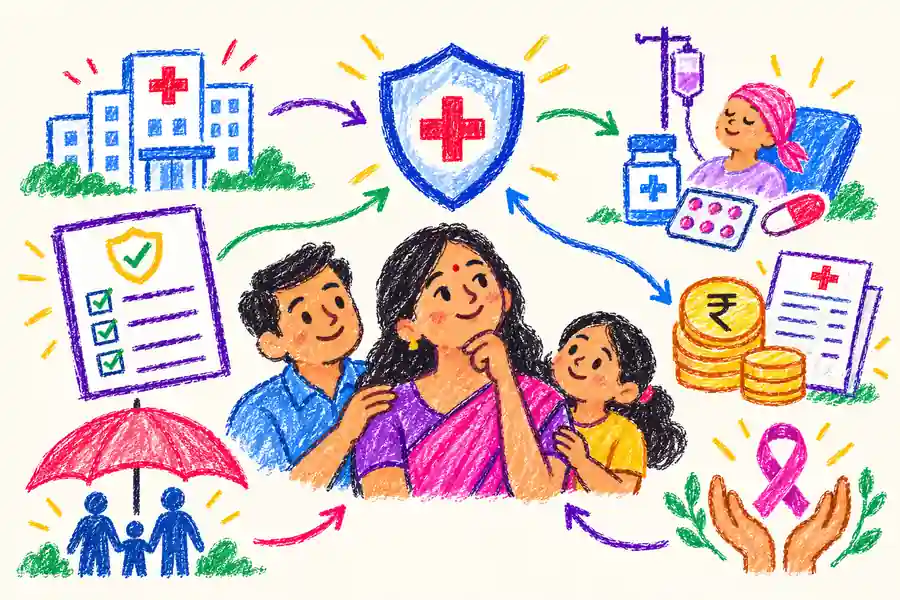
When you already have health insurance, it is fair to ask why you would look at another policy for one illness. The answer lies in how the benefits are set up. A health insurance policy can cover eligible medical expenses for a range of illnesses, subject to its terms. Cancer insurance, by contrast, focuses on cancer-related conditions defined in the policy. Knowing that difference matters when you compare the two.
What Does Cancer Insurance Add to a Health Insurance Policy?
Cancer care can involve hospitalisation, diagnostic expenses, follow-up care, medicines, and other healthcare costs. A health insurance policy may cover eligible expenses according to its terms.
Cancer insurance can work differently. The benefit may be linked to a defined cancer diagnosis rather than reimbursement of every medical expense. Some policies may pay a lump sum when stated conditions are met.
Cancer may not be defined in exactly the same way across every policy. Some policy wordings specify the severity of cancer and set conditions around diagnosis and eligibility.
How Can the Benefit Structure Differ?
Depending on the product, the benefit may be paid as a fixed amount, linked to specified stages, or provided against eligible medical expenses.
| Factor | Health Insurance Policy | Cancer Insurance |
| Main focus | A range of eligible healthcare expenses | Cancer-related conditions specified in the policy |
| Benefit basis | May cover eligible medical expenses | May provide a defined benefit or cover eligible expenses |
| Coverage scope | Broader medical needs | Focused on specified cancer-related conditions |
| Policy terms | Limits and conditions vary | Cancer definition and benefit conditions vary |
Some products may also have waiting or survival periods. These are not universal, so check the policy wording.
What Can Affect the Cost of Cancer Insurance?
Premiums can vary between products. Age, sum insured, policy benefits, and the terms of the cover can influence the amount payable.
When comparing costs, look at the premium alongside the benefit provided. Two policies may have different benefit amounts, conditions, and limits, making a price-only comparison less useful. The payment frequency and renewal terms may also matter when you consider the longer-term cost of the cover.
What Should You Check Before Comparing Cancer Insurance?
Here is what you can check:
- Cancer definition: Check how the policy defines covered cancer and whether a particular severity is specified.
- Waiting period: See whether a waiting period applies before the benefit becomes available.
- Survival period: Some policies require the insured person to survive for a stated period after diagnosis before a benefit is payable.
- Benefit amount: Check the sum insured or stated benefit and how it is paid.
- Existing conditions: Read how pre-existing diseases and related conditions are treated.
- Exclusions and limits: Check the policy wording for applicable exclusions, limits, and conditions.
Conclusion
A cancer insurance policy can have a different benefit structure, which may make it relevant depending on what your existing health insurance cover already provides. The key is to look at the two policies together rather than treating one as a substitute for the other. Once you understand where the benefits overlap and where they differ, you can decide whether an additional cancer-focused cover fits your existing insurance requirements.