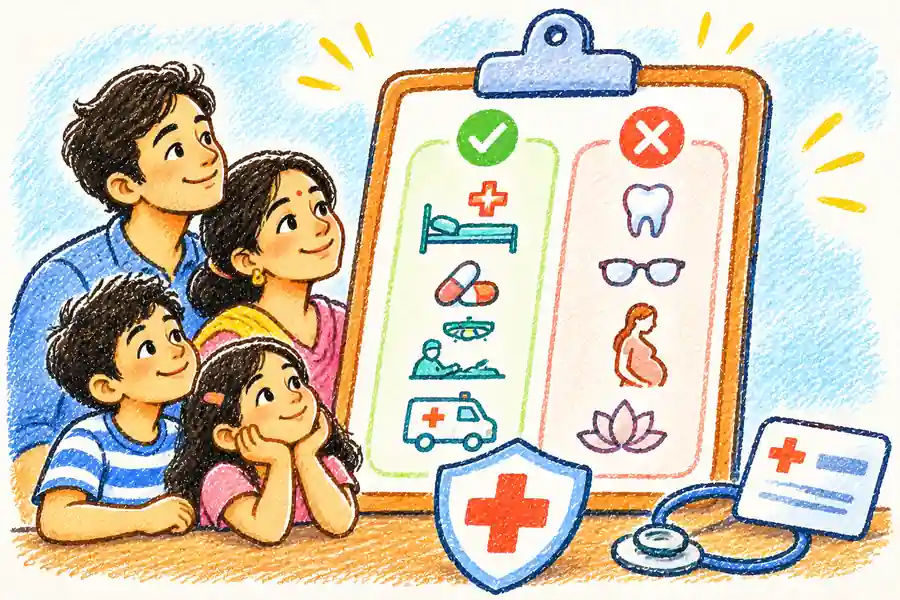

A regular health insurance policy and critical illness cover work differently. One generally deals with eligible medical expenses, while the other can provide a fixed lump sum when a covered critical illness is diagnosed, subject to policy terms. If you are reviewing your health insurance, understanding this difference can help you see where critical illness cover fits.
What Is Critical Illness Cover?
Critical illness cover provides a fixed lump sum when the insured person is diagnosed with a specified critical illness or undergoes a specified procedure covered under the policy.
A cover may list conditions such as cancer, stroke, heart attack, kidney failure, or major organ transplant, but the exact list and definitions depend on the policy wording. Read those definitions before assuming a condition qualifies.
How Is It Different from Regular Health Insurance?
The main difference is how the benefit works.
| Feature | Health Insurance Policy | Critical Illness Cover |
| Benefit type | Usually linked to eligible medical expenses | Fixed lump sum |
| Trigger | Eligible treatment or hospitalisation, depending on policy | Diagnosis of a specified illness or procedure |
| Amount paid | Subject to eligible expenses and policy limits | Fixed amount stated under the cover, subject to terms |
| Main purpose | Helps address eligible healthcare expenses | Provides a lump sum following a covered critical illness |
A critical illness benefit is not simply another way of paying hospital bills. Its lump sum can address financial needs associated with the illness, according to the cover terms.
Why Can a Lump Sum Matter?
A serious illness can affect household finances beyond the hospital bill. You may have other expenses to manage during recovery, or a temporary change in income may affect your regular budget.
The fixed benefit gives you an amount that is not calculated in the same way as an indemnity health insurance claim. How you can use the amount depends on the nature and terms of the policy.
This gives critical illness cover a different purpose from regular health insurance.
What Should You Check Before Choosing the Cover?
Before choosing a cover, check:
- Covered illnesses: Read the complete list of illnesses included under the policy.
- Definitions: Check how each critical illness is defined in the policy wording.
- Waiting period: Some covers may have a waiting period before the benefit becomes applicable.
- Survival period: Where applicable, check whether the policy requires survival for a specified period after diagnosis.
- Benefit amount: Confirm the lump sum available under the cover.
- Termination conditions: Check what happens to the cover after a benefit is paid.
Can Critical Illness Cover Replace Health Insurance?
Critical illness cover should not be treated as a replacement for a regular health insurance policy. The two types of cover work differently because one may address eligible medical expenses, while the other provides a fixed benefit for a specified critical illness.
If you already have health insurance, review the critical illness benefit separately. Look at the conditions, definitions, waiting period, benefit amount, and other terms before deciding whether additional cover fits your needs.
Conclusion
A useful way to look at critical illness cover is to ask what financial need it addresses that your existing health insurance may not address in the same way. A hospitalisation policy and a critical illness cover operate on different payment structures. Before adding critical illness cover, read the illness definitions and benefit conditions carefully. This gives you a clearer understanding of what the additional cover is intended to provide if a specified condition is diagnosed.