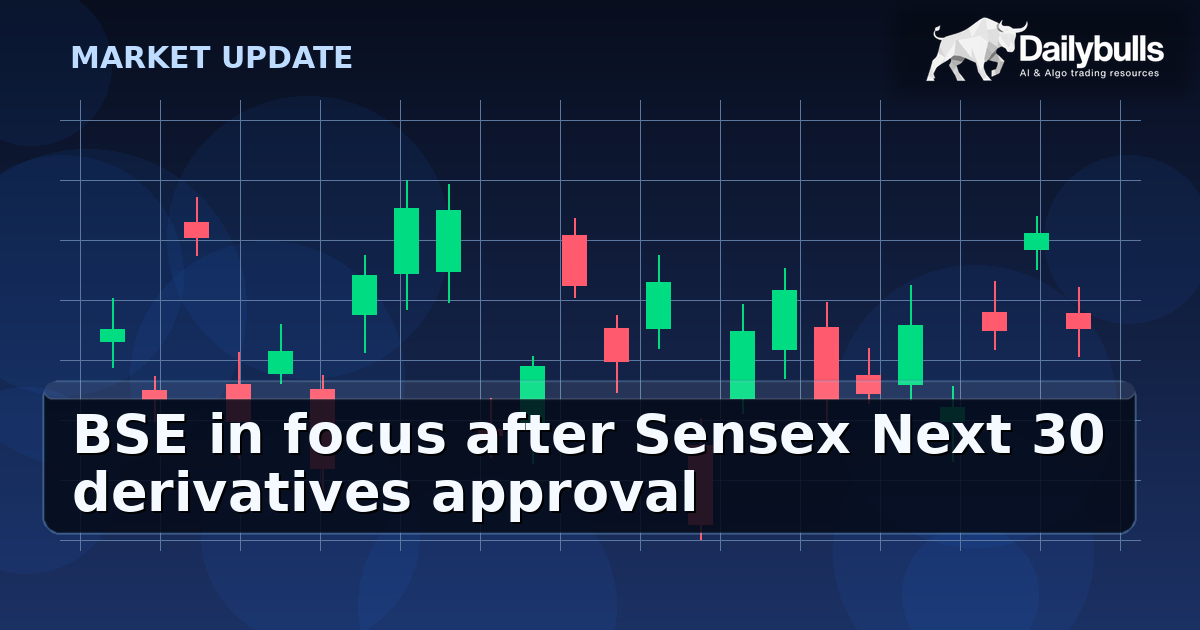
BSE in Focus After Sensex Next 30 Derivatives Approval: What to Watch
BSE in Focus After Approval for Sensex Next 30 Derivatives
BSE shares stayed in focus after a regulatory go-ahead for futures and options contracts linked to the Sensex Next 30 index. The development matters because new index derivatives can change trading participation, hedging behaviour, and liquidity patterns across the broader market ecosystem.
The immediate market reaction was a rise in BSE stock during the session, while the policy signal itself points to a medium-term market-structure story rather than a one-day move alone. In practical terms, the approval expands the set of listed index products available to participants and can gradually alter where trading volumes concentrate.
For background, see our earlier note on Sensex Next 30 derivatives.
What has changed
The key update is approval to launch derivatives on the Sensex Next 30 index. This is a transmission-type policy event: it does not depend only on a single earnings print or one macro data release. Instead, it affects the market’s plumbing by widening instrument choice for hedging and tactical exposure.
When new contracts are introduced, participation typically depends on contract design, spread behaviour, execution quality, and depth over the first few weeks. Early turnover can be uneven, but sustained activity can improve discoverability and create an additional reference point for traders managing large portfolios.
Why the market is watching this closely
Three factors explain why this approval is being tracked beyond headline value:
– Liquidity migration risk and opportunity: Some volume may rotate across existing index products depending on cost and execution quality.
– Hedging flexibility: Broader contract choice can improve hedging precision for baskets aligned with the underlying index segment.
– Ecosystem impact: Brokers, arbitrage desks, and proprietary participants may adapt strategies as depth builds.
This is why the event is being read as a market-microstructure signal, not just a stock-specific trigger.
What to watch in the next few sessions
Investors should track implementation and usage signals rather than assuming linear follow-through from the first day reaction.
Key checkpoints include:
1. Early contract turnover and open interest trend after launch.
2. Bid-ask behaviour and execution depth versus established index contracts.
3. Whether activity remains concentrated or broadens to a stable participant base.
A steady build in participation would support the view that the product is gaining functional relevance. If activity stays thin, the immediate impact may remain sentiment-led.
Broader context
Recent sessions have already seen selective risk-taking across segments, with market participants balancing global risk cues and domestic policy developments. In that backdrop, incremental changes to market instruments can become important because they affect how risk is priced and transferred, especially in volatile periods.
The current update should therefore be viewed as a structural market development with a near-term sentiment tailwind, while the lasting impact will depend on adoption data after rollout.
Bottom line
The approval for Sensex Next 30 derivatives adds a new layer to India’s listed derivatives landscape. The initial stock response reflects optimism, but the more durable signal will come from post-launch depth, turnover quality, and consistency of participation over time.
Share this insight
Spread the Alpha
Related Articles
More ideas that align with your trading playbook.

Reliance AGM 2026 Highlights: Jio IPO, AI and New Energy Plans Explained
Reliance Industries’ annual general meetings usually come with big announcements. The 2026 AGM was no different. But beneath the new products, ambitious…
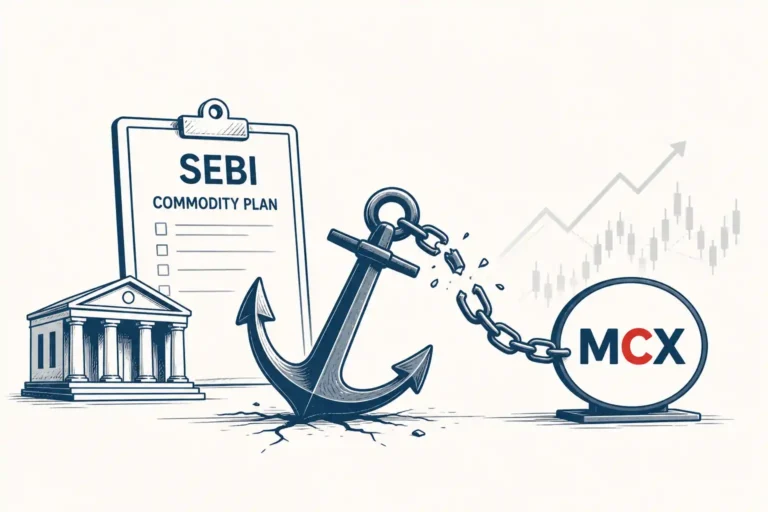
SEBI’s Commodity Plan Just Lost Its Institutional Anchor. What It Means for MCX
SEBI wanted banks, insurers, and eventually pension funds to deepen India's commodity derivatives market. RBI and IRDAI are not inclined to allow…

India’s Data Center Power Trade: Which Stocks Benefit First if AI Infra Spending Accelerates?
India's AI buildout may look like a software story, but the first listed winners could emerge from transformers, cables, switchgear, backup power,…

 DailyBulls (Arthashilpi Ventures) is a D-U-N-S verified company.