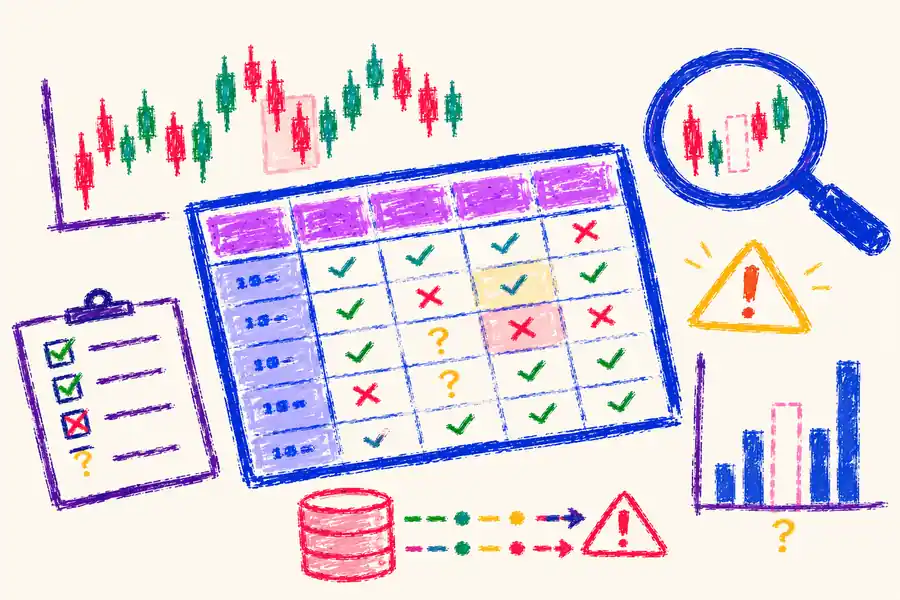
DailyBulls uses market data, company disclosures, and structured analytical workflows to produce educational market content and forecast-oriented pages. Our methodology is designed to help readers understand how data is gathered, how models are used, and what the limitations of a forecast page are.
Core inputs
Depending on the page type, DailyBulls may use:
- price history
- volume and liquidity data
- technical indicators
- company financial data
- valuation metrics
- sector and industry classifications
- company descriptions and reported business updates
- market-wide context and relative performance data
These inputs may come from internal databases, exchange-linked data feeds, company-reported information, and internal data-processing systems.
How we use data
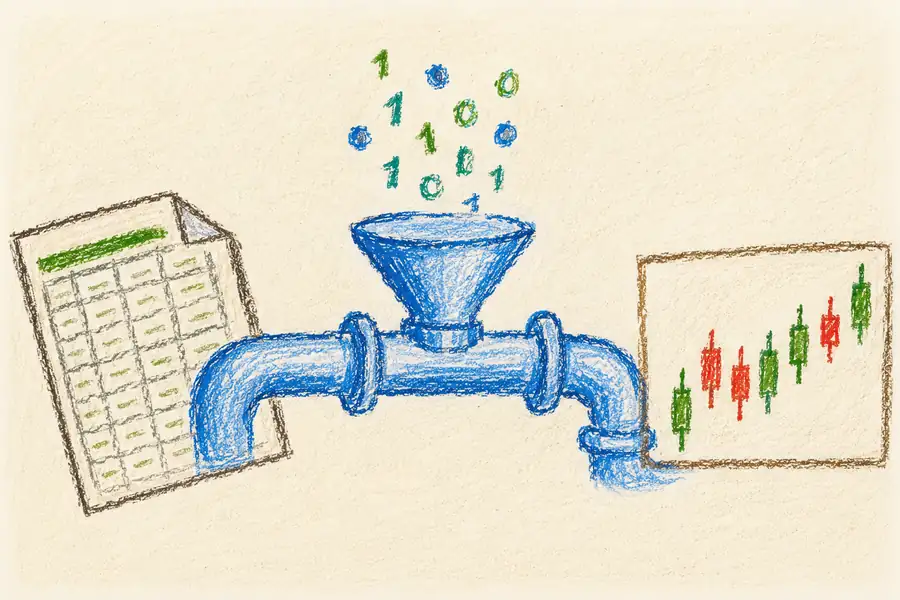
We use structured systems to collect, normalize, store, and update market data at scale. These systems help us reduce manual errors, keep tables and charts current, and support repeatable research workflows across many symbols and sectors.
For analytical pages, we may combine:
- reported financial information
- historical price behavior
- quantitative indicators
- scenario-based assumptions
The purpose of these workflows is to improve consistency and clarity. They do not remove uncertainty from financial markets.
Forecast content
Forecast pages on DailyBulls should be read as scenario-based research content, not as promises of future performance. A forecast is inherently uncertain and can be affected by:
- company execution
- earnings performance
- valuation re-rating or de-rating
- regulation
- liquidity conditions
- sector sentiment
- broader market conditions
For that reason, DailyBulls prefers to frame long-horizon outcomes as scenarios, ranges, or model-based estimates rather than certainties.
Model-assisted analysis
Some pages may include outputs produced with internal quantitative models or automated calculations. Where that is the case, we aim to disclose:
- the data date or as-of date
- the model or methodology version, where relevant
- the review status of the page
- the fact that forecasts are estimates, not guarantees
We do not treat model outputs as facts. They are one input into a research page and should be understood in the context of uncertainty, risk, and changing market conditions.
Update frequency
Different pages are updated on different schedules depending on the nature of the content:
- market-data tools may update as fresh data becomes available
- company analysis pages may be updated after major filings or results
- forecast pages may be revised when inputs, assumptions, or methodology change materially
An updated timestamp indicates that a meaningful revision has been made. It does not mean a page has become more certain or that a forecast is more likely to be correct.
Human review
DailyBulls uses data systems and model-assisted workflows to support research, but published pages remain subject to human editorial oversight. Human review may include checks for:
- factual consistency
- sourcing quality
- numerical reasonableness
- clarity of disclosures
- distinction between fact, analysis, and forecast
Limitations
No methodology can remove market risk or predict the future with certainty. Historical price behavior, technical indicators, and company-reported data can all be useful, but none should be treated as complete or definitive on their own. Readers should treat DailyBulls content as educational research and verify important information through primary sources before making financial decisions.
 DailyBulls (Arthashilpi Ventures) is a D-U-N-S verified company.